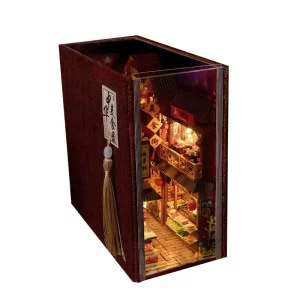
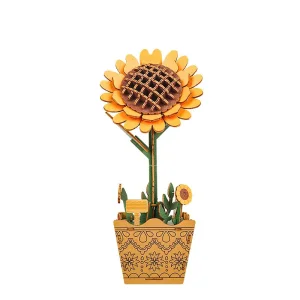
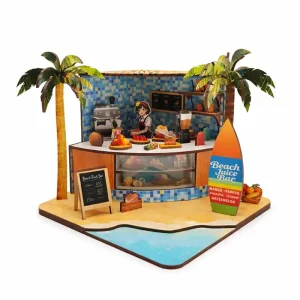
In the contemporary B2B landscape of recreational consumer goods, educational toys, and high-end wooden collectibles, the demand for 3D puzzle assembly designs has reached an unprecedented peak. Once categorized strictly as simple children's playthings, these intricate constructions have evolved into sophisticated engineering marvels that blend aesthetic beauty, mechanical complexity, and structural integrity. Global distributors, retailers, and private label importers seek top-tier manufacturers capable of executing complex geometries, reliable friction-fit tolerances, and integrated electrical components (such as LED wiring and dynamic sound sensors).
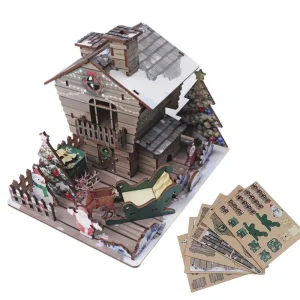
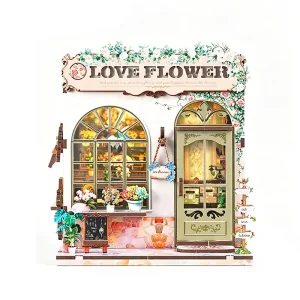
As a leading industry force, LINYI WOODEN TOYS LIMITED COMPANY operates at the forefront of this industrial transformation. Specializing in wooden DIY kits, 3D wooden puzzles, LED miniature houses, and architectural book nooks, the company provides end-to-end OEM and ODM capabilities. This whitepaper analyzes the current global industry standards, technical pipelines, quality assurance milestones, and localization paradigms that define state-of-the-art 3D puzzle design and mass production.
The global market for 3D wooden puzzles and DIY assemblies has experienced structural growth driven by the "Kidult" movement—adult consumers seeking screen-free, stress-relieving activities—alongside an educational emphasis on STEM/STEAM paradigms in primary and secondary learning. Geographically, North America and Western Europe remain the largest import markets, valuing material authenticity, ecological certification (FSC), and non-toxic treatments. Concurrently, the Asia-Pacific region is experiencing rapid consumption growth, alongside serving as the dominant hub for manufacturing innovation.
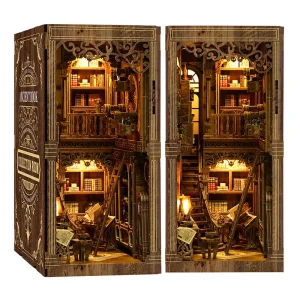
Modern consumers are no longer satisfied with static models. The market now prioritizes hybrid functional creations: book nooks with built-in ambient lighting that simulate miniature street scenes inside bookshelves, mechanical clockworks that function with winding springs, and architectural models integrated with sensory LEDs. This crossover of home decor and puzzle gaming has opened up fresh distribution channels in bookshops, design boutiques, and museum stores globally.
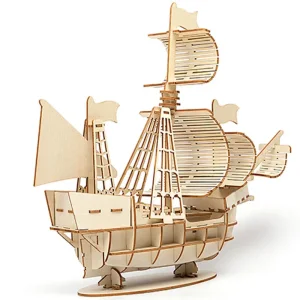
The manufacturing threshold for high-quality 3D puzzles is defined by material consistency and high-speed CNC or CO2 laser cutting technologies. Moisture content control in natural wood sheets (typically maintained between 8% to 12%) is critical to prevent warping during sea transit and warehouse storage. Kerf compensation—adjusting for the wood material burned away by the laser beam—must be calculated meticulously for each batch to guarantee that slots and tabs fit firmly without requiring excessive force or glue.
CAD and 3D modeling optimization ensures stress distribution is calculated to prevent thin structural ribs from fracturing during consumer disassembly and interlocking puzzle operations.
Utilizing high-definition industrial UV printers to print directly onto wood substrates. Offers excellent color fastness, resistance to fading, and crisp alignment with laser cutting lines.
Raw material optimization including premium basswood (highly uniform, dense grain structure), poplar plywood (cost efficiency, lightweight stability), and high-density, low-emission formaldehyde MDF boards.
Moving beyond simple switches to acoustic and infrared proximity motion-activated sensor control systems, transforming 3D models into responsive ambient light installations.
Integrating biodegradable polymers with traditional wood processing to manufacture hyper-detailed decorative accessories, combining organic textures with industrial durability.
Deploying interactive 3D step-by-step mobile software companions to replace traditional printed booklets, reducing ecological footprint and optimizing consumer assembly journeys.
Automating board sorting, laser path adjustments, defect recognition by computer vision, and pneumatic inline packaging to minimize lead times for larger bulk orders.
Optimizing custom manufacturing processes requires understanding localized regulatory and market expectations. For instance, European importers require strict compliance with EN71 and REACH chemical testing, while North American importers require certified compliance with ASTM F963 and TSCA Title VI for formaldehyde emissions. Our one-stop services cater specifically to these localized requirements:
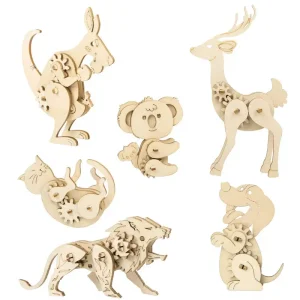
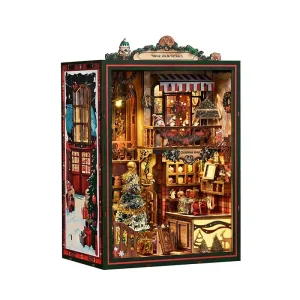

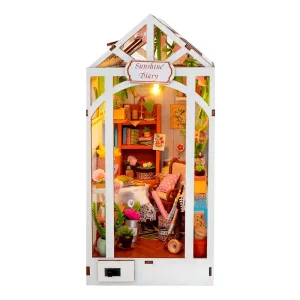
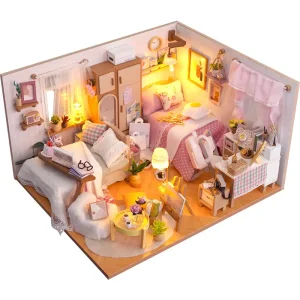
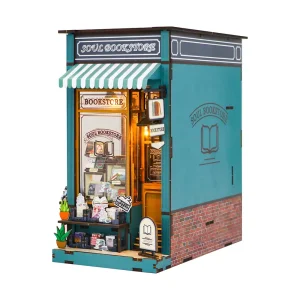
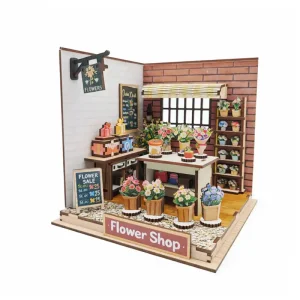
LINYI WOODEN TOYS LIMITED COMPANY stands as a premier professional OEM/ODM manufacturer specializing in wooden DIY kits, 3D wooden puzzles, miniature house kits with LED lights, book nook kits, wooden educational toys, Montessori toys, and custom wooden craft products.
We provide a comprehensive, one-stop service workflow. From initial product concept development, structure design, precision laser cutting, laser engraving, UV printing, assembly testing, and instruction design to custom packaging design and secure bulk production, we handle it all. Our custom solutions serve toy brands, gift retailers, hobby shops, museum stores, e-commerce sellers, and private label buyers worldwide. With support for custom themes, logos, colors, structural adjustments, and certified testing, we deliver precision-made wooden designs from our factory directly to your global warehouses.
 CraftODM