Explore our premium range of precision-engineered wooden puzzles and models, designed for international compliance and retail success.
The global toy and hobby market is witnessing a profound paradigm shift. Consumers are increasingly transitioning from passive digital entertainment to tactile, intellectually stimulating experiences. Inside this resurgence, kinetic wooden puzzles have carved out a highly profitable niche. Combining the elegance of mechanical engineering with the natural beauty of sustainably sourced timber, these puzzles are more than toys—they are functioning machines powered by gravity, springs, and gears.
For distributors, specialty toy brands, educational institutes, and e-commerce aggregators, sourcing premium mechanical model kits represents a strong growth channel. However, moving complex kinetic models from prototype to retail shelves requires solving deep design, manufacturing, and regulatory compliance challenges. Selecting the right production partner is critical to commercial viability.
Information Gain Insight: Unlike standard stationary 3D puzzles, kinetic models feature moving gear trains, escapements, and drive systems. This demands mechanical tolerances under 0.05mm to ensure smooth movement without binding.
Advanced kinetic puzzles incorporate complex planetary gear assemblies, pendulum regulators, and spring-driven escapement mechanisms. Every component must align with mathematical precision to translate potential energy into smooth, visible movement.
Targeting major retail markets in the EU, North America, and APAC demands absolute conformity with international toy safety directives. Meeting CE, EN71, and ASTM protocols is essential for seamless customs clearance and brand protection.
Data-driven insights illustrating the scale, efficiency, and growth patterns of the mechanical puzzle manufacturing industry.
Why timber selection and mechanical processing decide the durability, consumer safety, and structural integrity of the final puzzle kit.
We source Russian Basswood for its tight grain, uniform density, and resistance to warping. Poplar offers a cost-effective alternative for structural layers, while high-grade CARB Phase 2 compliant MDF serves well in structural backdrops and frames.
Wood is hygroscopic. Our raw timber boards undergo kiln-drying and conditioning to lock moisture content at an optimal 8% to 12%. This prevents dimensional shrinkage, expansion, or deformation during cross-continental shipping and storage.
Our structural design engines incorporate micro-level kerf compensation. This compensates for the material vaporized by the laser beam, ensuring a snug, tool-free press-fit assembly that remains stable throughout the product's lifespan.

Navigating customs and maintaining product liability compliance in the European Economic Area requires a solid understanding of toy safety regulations. Under the European Toy Safety Directive (2009/48/EC), kinetic puzzles are evaluated under rigorous testing parameters. Our production processes are designed to comply with these essential benchmarks:
We collaborate closely with accredited testing agencies like SGS, TÜV, and Intertek. When clients opt for LED modules, miniature motors, or lithium battery packs to drive their kinetic sculptures, we ensure all components meet the necessary electrical safety standards.
By establishing tracing systems and maintaining detailed Technical Files (including Declaration of Conformity and safety assessments), we help our clients mitigate import risks, avoid customs delays, and shield themselves from consumer litigation.
Linyi, Shandong holds a leading position in the global timber processing and toy manufacturing supply chain. Here is how we turn this industrial advantage into value for our clients.
Operating in Linyi allows us to source high-grade timber directly from processing hubs. This reduces transport costs and raw material markup, allowing us to pass significant savings on to our clients in our product quotes.
Our facilities house multi-head CNC laser cutters, high-precision UV printers, and automated packaging lines. This advanced equipment allows us to handle large-volume orders while maintaining consistent detail on complex puzzle sheets.
Kinetic puzzles require precise structural design. Our in-house engineering team uses CAD/CAM modeling to design, test, and refine complex gear linkages, creating clear, multi-language manuals that minimize assembly issues.
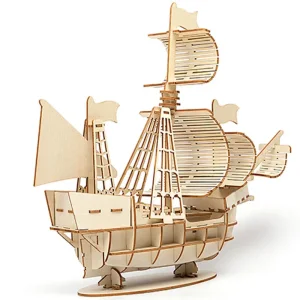
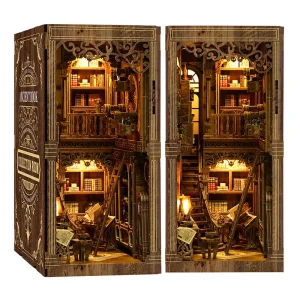
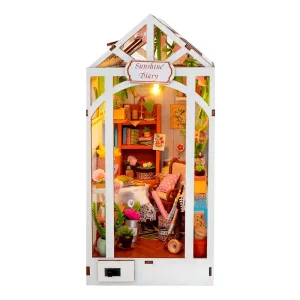
LINYI WOODEN TOYS LIMITED COMPANY is a professional OEM/ODM manufacturer specializing in wooden DIY kits, 3D wooden puzzles, miniature house kits with LED lights, book nook kits, wooden educational toys, Montessori toys, and custom wooden craft products. We provide one-stop services from product concept development, structure design, laser cutting, laser engraving, UV printing, assembly testing, and instruction design to custom packaging and bulk production. Our products are suitable for toy brands, gift retailers, hobby shops, museum stores, e-commerce sellers, and private label buyers. Main materials include basswood, poplar, and MDF. We support custom themes, logo, color, packaging, structure, and OEM/ODM development. MOQ normally starts from 200 pcs. FSC material options are available, and product testing such as CE, EN71, REACH, RoHS, and EN IEC 62115 can be arranged according to final product requirements and target market.
Sourcing kinetic wooden puzzles is a structured process. Simple design mistakes or miscommunicated specifications can lead to production delays or packaging compatibility issues. When submitting an RFQ to a manufacturer, providing these critical details helps secure an accurate and competitive quote:
Understanding the typical phases from initial concept to delivery helps keep launch plans on track.
Clear, direct answers to common questions asked by global sourcing managers and retail brands.
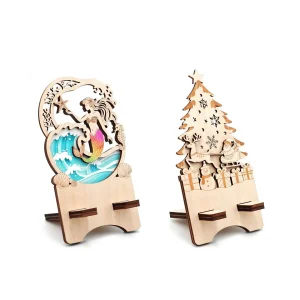
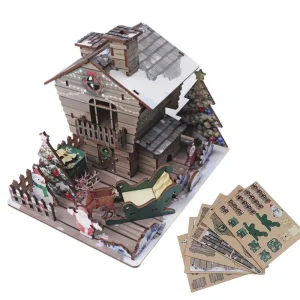
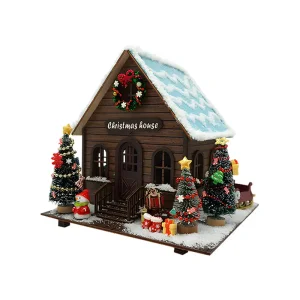
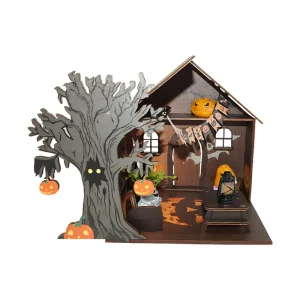
Premium options for custom collections, holiday promotions, and specialty gift items.
 CraftODM