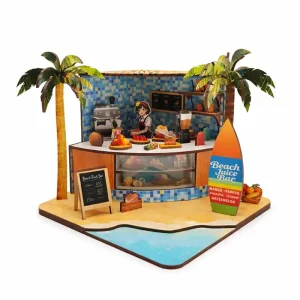
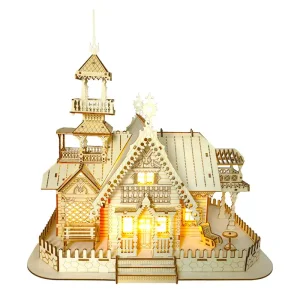
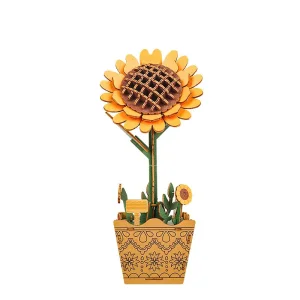
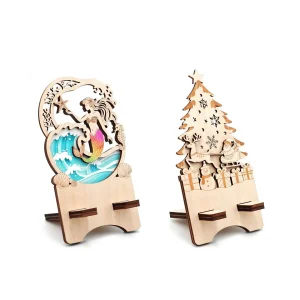
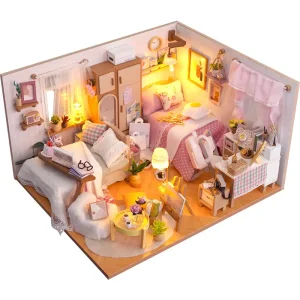
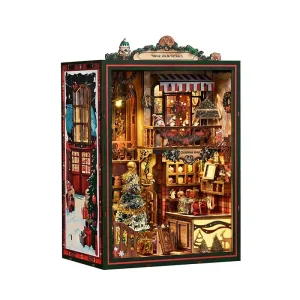
Explore our top-selling precision laser-cut models, featuring structural durability, non-toxic materials, and compliance with EU/US safety regulations.
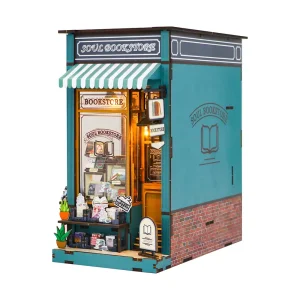
The global demand for laser-cut wooden kits, 3D mechanical puzzles, and miniaturized book nooks has experienced a massive resurgence. Once categorized strictly as hobbyist items or children's toys, these products have matured into sophisticated, high-value consumer goods spanning across the educational (STEAM), home décor, therapeutic craft, and corporate gifting sectors. Rapid urbanization, combined with a growing consumer desire for digital detoxification, has driven the market for immersive, tactile assembly crafts.
Key global consumption regions include North America and Western Europe, where there is strong retail demand for FSC-certified, ecologically sustainable materials. In the Asia-Pacific region, the integration of traditional pop-culture concepts, light-up architectural dioramas, and modular mechanical toys has turned wooden model building into a mainstream trend. Crucially, the modernization of industrial laser cutting machinery has allowed manufacturers to scale production while retaining precision micro-tolerances of less than 0.05 mm, making structural assembly smoother without requiring glue.
The laser-cut wooden kit sector is transitioning from static puzzles toward interactive, multi-sensory kits. This evolution is driven by several technological advancements and shifting buyer expectations:
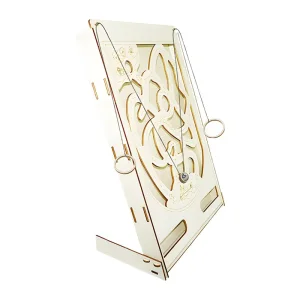
Modern consumers demand moving parts. Integrating gear trains, gravity-fed marble runs, and kinetic escapements turns static puzzles into dynamic masterpieces.
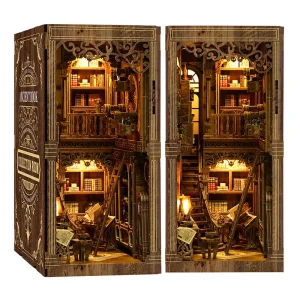
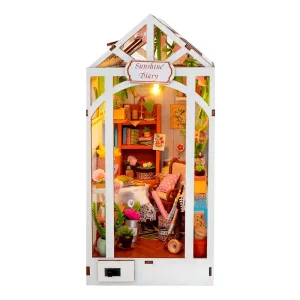
Wooden parts are now augmented with micro-electronics, LED lighting systems, acrylic mirrors, and brass components to construct immersive scenes such as lighted book nooks.
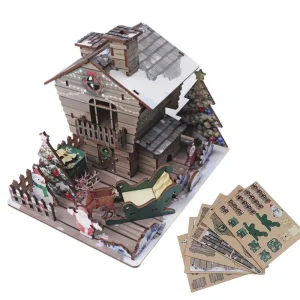
Moving beyond monochrome scorched wood, high-precision UV printing inks are applied directly onto wood boards to achieve vibrant, fade-resistant, and non-toxic coloring.
Creating high-quality 3D wooden kits requires rigorous raw material selection. Different wood species perform uniquely under the heat of CO2 lasers. The table below outlines the primary substrates utilized in modern kit manufacturing:
| Material | Common Thicknesses | Structural Profile | Optimal Use Case |
|---|---|---|---|
| Premium Basswood Plywood | 1.5mm, 2.0mm, 3.0mm, 4.0mm | Uniform density, fine grain, low resin, minimal warping, resistant to splintering. | Complex mechanical gears, interlocking joints, detailed structural plates. |
| Poplar Plywood | 2.0mm, 3.0mm, 5.0mm | Lightweight, economical, clean cut edges, slightly softer than Basswood. | Large structural housings, outer frames, display ornaments. |
| Medium Density Fiberboard (MDF) | 2.5mm, 3.0mm, 6.0mm | Homogeneous structure, no grain direction, very flat, high density. | Baseboards, heavy-duty hidden supports, cost-sensitive custom panels. |
Laser cut tolerances are controlled down to $\pm 0.05$ mm to ensure reliable push-fit (or snap-fit) mechanics. Over-cutting or loose tolerances lead to structure collapse, while insufficient kerf compensation results in split wood fibers during assembly. The moisture content of the wood sheets is kept strictly between 8% and 12% to prevent shrinking or warping during overseas maritime transit.
Compliance is critical for toy brands, retailers, and private label importers. Wooden kits targeting markets like the European Economic Area (EEA) must verify conformance with safety mandates:
Laser cut wooden kits target diverse end markets, each with specific requirements:
Sellers on Amazon, Shopify, and Etsy require unique structural designs, high-end packaging, and optimized box sizes to minimize FBA fulfillment fees.
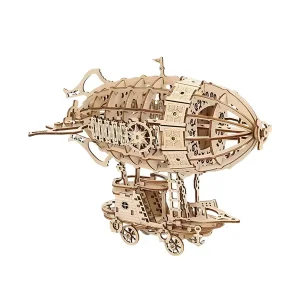
Educational gift shops demand historical accuracy. Custom kits depicting ancient architecture, retro airships, and classical engineering models serve as high-margin souvenirs.
Schools and STEM centers use wooden kits for tactile engineering experiments. These kits focus on structural dynamics, gear ratios, and fundamental mechanics.
Looking ahead, the wooden DIY kit industry is moving toward smart manufacturing and enhanced consumer interactivity:
LINYI WOODEN TOYS LIMITED COMPANY is a professional OEM/ODM manufacturer specializing in wooden DIY kits, 3D wooden puzzles, miniature house kits with LED lights, book nook kits, wooden educational toys, Montessori toys, and custom wooden craft products. We provide one-stop services from product concept development, structure design, laser cutting, laser engraving, UV printing, assembly testing, and instruction design to custom packaging and bulk production.
Our solutions support toy brands, gift retailers, hobby shops, museum stores, e-commerce sellers, and private label buyers worldwide. Our main materials include basswood, poplar, and MDF. We support custom themes, logos, colors, packaging, structure modifications, and completely original OEM/ODM development. Our standard production MOQ normally starts from 200 pcs. FSC-certified material options are available, and product safety testing (such as CE, EN71, REACH, RoHS, and EN IEC 62115) can be arranged according to your final design specifications and target market requirements.
 CraftODM