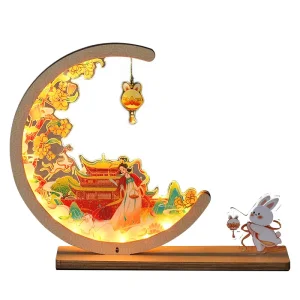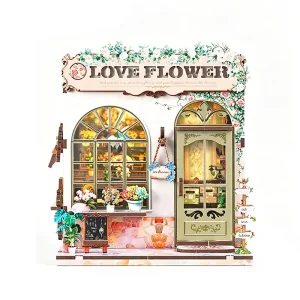
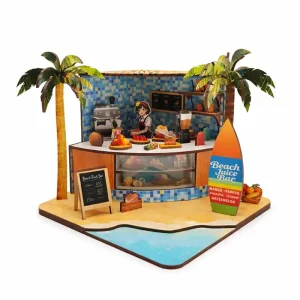
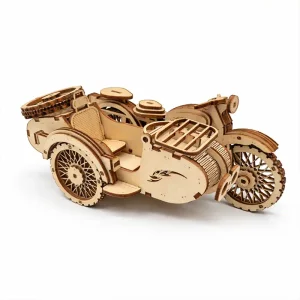
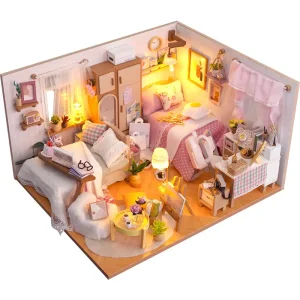
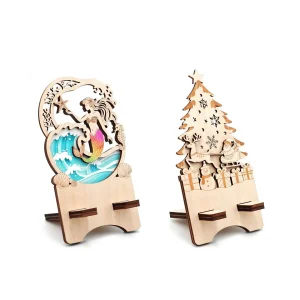
CE Certified Wooden Assembly Model Kits

Empowering Global Toy Brands and Specialty Retailers with Premium OEM/ODM Woodcraft Manufacturing

Global Commercial Landscape: The Evolution of Wooden Assembly Kits

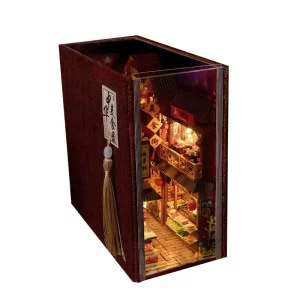
The global market for 3D wooden puzzles, DIY book nooks, and miniature house kits has experienced a profound shift from niche mechanical craft projects to mass-market educational and therapeutic consumer electronics-embedded toys. Driven by a global consumer demand for offline, tactile alternatives to digital entertainment and screen-time fatigue, the industry has seen double-digit compound annual growth rates (CAGR). Today, wooden assembly kits are not only popular among hobbyists but are also widely adopted in corporate team-building events, therapeutic sensory workshops, and design-led lifestyle gifts.

From a manufacturing standpoint, this evolution is supported by technological advancements in laser cutting, UV printing, and sustainable forestry. Global distributors, large retail chains, and boutique brand owners are increasingly demanding stringent quality assurance, eco-certifications, and safety compliant products. Suppliers must possess not only design capability but also high-volume compliance certifications like the European CE Mark, FSC Chain of Custody, and EN71 verification to access key markets in North America, Western Europe, and Japan.

Compliance & Safety Core: For high-end export markets, CE Certification is the foundational passport. Ensuring raw materials like basswood and MDF undergo strict chemical and structural safety tests is what separates premium factories from low-cost workshops.

Emerging Industry Trends

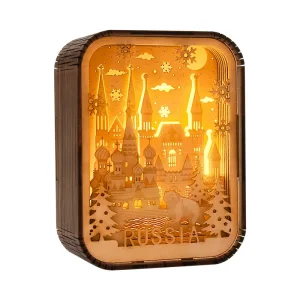
  • Smart Device & LED Integration: Modern kits are no longer static. There is a strong consumer drive toward products integrated with LED lighting, motion sensors, music boxes, and micro-motors, creating immersive nightscapes.
  • Green & Circular Sourcing: Chain of Custody compliance (FSC) is a top buyer requirement. The demand for toxic-free materials, formaldehyde-free glues (or zero-glue slot structural designs), and vegetable-based inks is shaping supply chains.
  • Intricate Laser Micro-machining: Cutting technology now supports slot tolerances down to 0.05mm. This enables seamless friction-fit (snap-together) assemblies that eliminate the need for mess-prone liquid adhesives altogether.
  • Omnichannel Private Labeling: E-commerce growth has triggered high demand for customized packaging, private-label branding, and fast prototype iterations for Amazon, Kickstarter, and Shopify sellers.

Local Application Scenarios & Global Supply Chain Adaptation

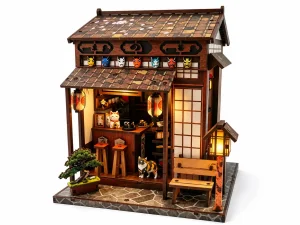
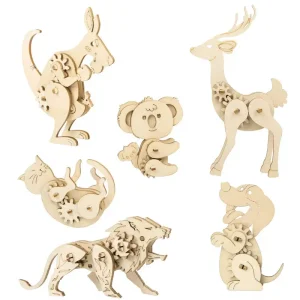
Wood assembly kits serve diverse consumer demographics. In high-density urban areas like Tokyo, London, and New York, miniature book nooks and tabletop dollhouses serve as space-saving decorative arts that bring warmth into modern apartments. In academic settings across North America, 3D mechanical models representing gear trains, gravity drops, and pendulum clocks are integrated into STEM/STEAM curricula to demonstrate physical concepts.

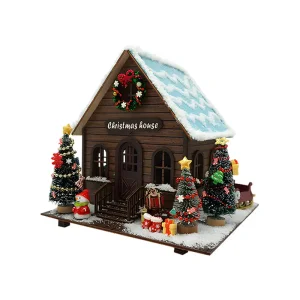
To satisfy these local markets, factories must offer localization support, such as multi-language step-by-step instruction guides, regional power adapters for lighting systems, and customized theme modifications. A beach shop theme might appeal to Australian coastal markets, whereas a cozy winter cottage is optimized for European Christmas promotions.
100%
FSC Option Sourced
< 0.05mm
Laser Cutting Tolerance
200+
Global Partners
CE/EN71
Regulatory Compliance

Technology Roadmap: Engineering Precision and Material Durability

Achieving structural integrity in wooden assembly kits requires an intricate balance between humidity control, grain alignment, and tooling laser wavelength. Wood is an organic material that naturally expands and contracts. At LINYI WOODEN TOYS LIMITED COMPANY, our engineering team utilizes high-density basswood plywood that undergoes multi-stage kiln drying to achieve a stable moisture content of 8% to 12%. This prevention measure reduces warping during long-distance maritime transit.

Calibrated Laser Kerf

We calibrate our laser cutters' focal spots to 0.08mm, compensating for the kerf (the wood vaporized by the laser). This ensures snap-fit joints click securely without looseness or wood glue.

Multi-Layer UV Printing

Replacing standard paper stickers with digital industrial UV direct-to-wood printing allows us to achieve vibrant colors, rich textures, and lightfast finishes that won't peel or fade over time.

Eco-Certified Materials

We utilize formaldehyde-emission grade CARB P2 MDF and FSC-certified birch and basswood to meet strict indoor environmental safety levels in Germany, France, and California.

Macro Solutions: From Concept to Retail-Ready Deliveries

Operating a successful hobby brand or toy store chain requires reliable procurement flow. Many suppliers suffer from high defective rates, incomplete hardware parts, or confusing manuals. Our macro manufacturing workflow addresses these structural pain points through an integrated six-stage QA process:

Production Phase Technical Operations & Controls B2B Quality Assurance Outcomes
1. Design & Engineering CAD structural layouts, interlocking stress testing, draft tolerance optimization. Zero-glue structural capability and reduced piece breakages during customer assembly.
2. Sourcing & Kiln Drying Selection of A-grade raw basswood, moisture extraction chamber processing. Flat boards that do not warp during container shipping across diverse climates.
3. High-Speed Laser Cutting Automatic focus CNC laser beds, carbonized residue cleaning protocols. Clean, bright wood edges with minimal soot, preserving precise fit dimensions.
4. HD UV Graphic Printing Multi-pass UV curable ink application, high-precision flatbed positioning. Scratch-resistant colors with depth of detail, eliminating peeling decals.
5. Component Collation Electronic scales measure parts bag weights down to 0.1 grams, micro-electronic sensor check. Virtually zero missing components (LEDs, wires, gears, panels) in end-consumer boxes.
6. Compliance Labeling Tracking codes, CE logos, warning labels, localized environmental disposal icons. Seamless customs clearances in major ports across the EU, US, UK, and Asia Pacific.

B2B Sourcing FAQ: Crucial Technical & Regulatory Standards

Below we address major technical, logistics, and compliance questions that purchasing managers, brand creators, and supply chain directors typically raise when evaluating wood puzzle and miniature house factories.

What precise tests must a wood assembly model kit pass to claim CE Compliance?

CE certification for wooden toy kits requires meeting the European Toy Safety Directive (2009/48/EC). This is evaluated under EN 71 standards: Part 1 for Physical and Mechanical Properties (testing for small parts, sharp points, and structural durability); Part 2 for Flammability; and Part 3 for Migration of Certain Elements (verifying zero heavy metal contamination in coatings or wood sheets). Additionally, if the product contains LED electrical circuits, it must comply with EN IEC 62115 (safety of electric toys), RoHS Directive, and REACH Regulations for plastic and wiring components.

Which type of plywood is best suited for high-end 3D mechanical model kits?

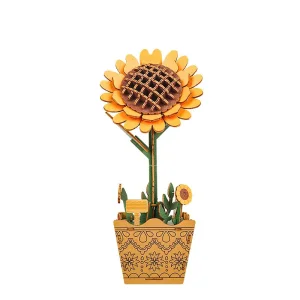
Premium 3D puzzle and assembly kits predominantly utilize basswood plywood. Basswood has a fine, uniform texture, high stability, low grain rise, and high dimensional strength, which prevents splinters and cracking when pushing small laser-cut parts out of sheet templates. For cost-effective solutions or heavier structures, high-quality Poplar plywood or dense MDF (Medium-Density Fiberboard) with wood veneer finishes is utilized.

Can we customize structural aspects, product packaging, and branding under your OEM service?

Yes, absolutely. We support comprehensive OEM/ODM customization. You can supply your own digital design vectors (DXF/PDF formats), or our design department can build a layout from your conceptual art. We customize the packaging layout (color gift boxes, corrugated boxes, shrink wrap, and cardboard sleeves), print your private label brand directly on the wooden sheets, and design user-friendly instruction leaflets tailored to your target consumer group.

What is the typical Minimum Order Quantity (MOQ) and production lead time?

Our standard MOQ for custom-branded or custom-structured kits starts at 200 pieces per design. For running inventory items under white label, MOQ requirements can be smaller depending on seasonal availability. Mass production lead times range between 20 to 30 days after sample approval and deposit confirmation.

How are missing components and customer replacement parts handled?

We pride ourselves on our low error rate (below 0.1%). We employ automated electronic gram-scales to verify each box weight before dispatching. However, in the rare event of missing pieces or breakage, we provide a replacement buffer with each batch, and we can ship replacement panels directly to the brand owner's fulfillment center to ensure high ratings and customer satisfaction.