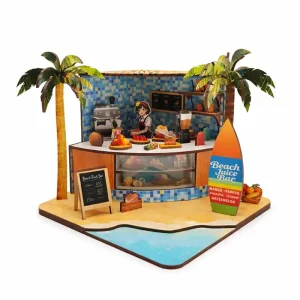
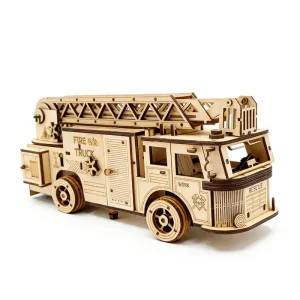

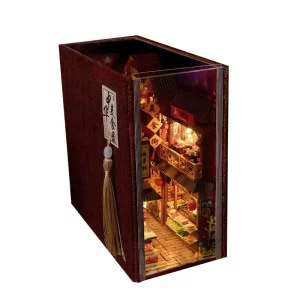
The global demand for high-fidelity structural miniatures—specifically mechanical cable cars, alpine tramways, and kinetic 3D puzzle structures—has experienced exponential growth. Driven by the convergence of the STEM educational market, high-end tourist merchandise development, and premium corporate collectible sectors, model cable cars represent a highly specialized segment. These are not merely toys; they are scaled mechanical systems requiring strict adherence to kinetic dynamics and material science.
Traditional manufacturing of scale railway models was dominated by plastic injection molding and heavy alloys, which created significant carbon footprints and inflated retail prices. Today, Linyi Wooden Toys Limited Company is leading a structural transition towards eco-friendly, premium wooden modular assemblies that deliver cost-competitiveness without sacrificing mechanical integrity. By leveraging state-of-the-art laser processing and complex interlocking designs, we manufacture high-precision model cable cars that capture regional aesthetics while functioning under physical mechanical laws.
Every physical kit designed by our engineering department undergoes simulated load tests to ensure operational lifespan and optimal tolerance margins.
Maintained within ±0.05mm limits to prevent mechanical jams in cable pathways.
High-density basswood layers with cross-grain lamination for moisture resistance.
A professional, vertically integrated OEM/ODM manufacturer delivering comprehensive engineering from raw timber processing to structural product deployment.
We source premium grade basswood, poplar, and medium-density fiberboard (MDF). Customers can request FSC-certified materials to meet stringent international environmental regulations.
From complex cable railway mechanism design, custom branding, and UV printing integration to specialized product packaging and step-by-step structural instruction manuals.
Our products conform to major international compliance standards. We actively arrange CE, EN71, REACH, RoHS, and EN IEC 62115 certification protocols based on product and market criteria.
We execute structural concepts through state-of-the-art automated manufacturing platforms.
Conversion of concept art into functional interlocking vectors.
Direct thermal vapor cutting preventing wood structural splintering.
Manual fitment evaluation on critical kinetic moving parts.
Developing functional wooden cable cars requires deep knowledge of mechanical physics and timber structural constraints. Unlike static models, a cable car contains rotational gears, dynamic wire tension structures, and structural support frames that must withstand shear stresses during manual or motor-driven operations.
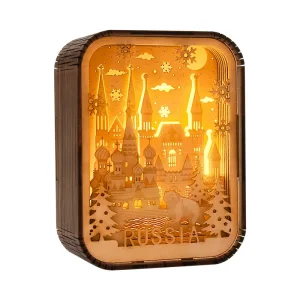
Our engineering roadmap begins with CAD optimization, balancing the thickness of the basswood board with the gear pitch diameter. We utilize CO2 laser cutting devices to ensure that every interlocking mortise and tenon joint is clean, eliminating the need for adhesives in many models. Furthermore, to support modern features, we incorporate low-voltage LED circuitry compliant with EN IEC 62115, producing illuminated miniature cable car stations and passenger cabins that serve as decorative showpieces.
Our development lifecycle integrates continuous research on anti-deformation coatings. Since wood reacts to changes in humidity, we use specialized surface sealing treatments to ensure that exported products maintain mechanical fit whether shipped to arid deserts or high-humidity tropical zones.
Analyzing the structural variables of the Linyi industrial cluster that allow our factory to deliver world-class products at competitive wholesale prices.
Situated in Linyi, China’s plywood processing hub, we enjoy direct access to raw timber, cutting regional transport expenses and ensuring raw material security.
Our facility runs high-efficiency multi-head laser cutting grids and integrated printing machinery. This setup helps minimize labor expenses and production lead times, even for large orders.
Decades of export experience enable us to navigate complex global customs, ensuring compliance paperwork is in order and avoiding unexpected delivery delays.
Model cable cars and customized wooden structural kits are highly effective across multiple localized marketing channels and target demographics:
Our OEM design department optimizes structural complexity to match specific target demographics, ensuring high satisfaction and low assembly failure rates.
Ensuring your product inventory complies with global import regulations, child safety laws, and environmental policies.
As a global brand supplier, Linyi Wooden Toys Limited Company understands that entering North American, European Union, and Asia-Pacific markets requires strict adherence to localized toy safety policies. Every production run is documented, tracing back to the raw timber harvest point to verify ethical sourcing.
We monitor compliance for lead, heavy metals, and formaldehyde emissions under REACH and RoHS regulations, keeping your products safe for distribution in strict retail markets.
For models featuring LED components and battery power, our electronic circuits undergo evaluation under EN IEC 62115 guidelines to guarantee reliable, long-term operation.
Answers to common questions about materials, customization, logistics, and engineering partnerships.
Our standard Minimum Order Quantity (MOQ) is 200 units per design. This enables us to optimize laser setup, printing calibrations, and structural packaging lines, keeping production cost-effective for both parties.
Yes. We offer FSC-certified options for our primary materials, including basswood, poplar, and MDF, ensuring smooth customs clearance in regions with strict environmental regulations.
Our engineering department creates physical prototypes and runs rigorous fitment and assembly stress tests. We check for gear mesh tolerance, cable slippage, and material wear before greenlighting mass production.
We supply retail-ready packaging solutions. Options range from corrugated craft boxes with full-color cardboard sleeves to custom printed boxes with laser-cut structural foam inserts to keep elements safe during transit.
Typically, structural design and initial prototyping take 7 to 10 working days. Once the prototype is approved, bulk production is completed within 25 to 35 days, depending on order size and customization requirements.
 CraftODM