Explore our premium architectural, mechanical, and seasonal custom-built wood kits featuring microscopic precision, integrated LEDs, and sustainable engineering.
Years OEM/ODM Expertise
Laser Kerf Precision
Minimum Order Quantity
FSC Wood Certification Options
A comprehensive study on consumer behavior shift, technological convergence, and manufacturing economics driving the wooden assembly kit sector.
In an increasingly digital landscape characterized by screens and immersive virtual experiences, consumers worldwide are experiencing digital fatigue. This paradigm shift has propelled 3D wooden puzzles, STEM models, and book nooks into high demand. No longer viewed simply as recreational crafts, wooden STEM models represent a fusion of architectural marvels, physical kinetic engineering, and mindful focus.
Global educators, parents, and cognitive developmental specialists are turning to high-precision wood kits as tactical teaching tools. These physical units introduce students to spatial awareness, physical mechanical transmission systems, and structural distribution dynamics. Consequently, the commercial scope of wooden toys has expanded from conventional playrooms to museum stores, novelty gift shops, secondary school STEM laboratories, and premium lifestyle corporate branding campaigns.
Plastic toys are increasingly restricted due to environmental directives (like the EU Plastics Strategy). Fine wood products offer a tactile feel, premium perception, and immediate compliance with circular economy principles. Wooden models achieve higher retail value retention and longer shelf-life compared to petroleum-derived competitors.
How Linyi Wooden Toys Limited Company merges geographic proximity, supply chain density, and modern manufacturing technology to deliver world-class wood models.
Linyi, located in Shandong Province, is one of China's most prominent timber processing hubs. We secure immediate access to premium sustainably harvested basswood, poplar, and medium-density fiberboard (MDF). This guarantees stable material sourcing, avoiding global cost fluctuations, and offers certified FSC (Forest Stewardship Council) supply chains for environmentally conscious retail sectors.
Our manufacturing complex utilizes state-of-the-art CO₂ laser cutting arrays and high-capacity CNC routers. By maintaining tolerances tighter than 0.1mm, we ensure that every slot-and-groove joint locks flush without glue. High-output laser lines execute clean cuts, eliminating heavy charring, while automated UV printers produce high-definition colors directly onto organic wood fibers.
From initial design sketches and structural load simulations to mass production, assembly, instructions layout design, and customized packaging—we host every department in-house. Our vertical system minimizes logistical delays, optimizes manufacturing speed, and guarantees that our standard low MOQ of 200 pieces is economically viable for new and scaling brands.
A technical guide to raw material attributes, structural design challenges, and testing protocols required to launch commercial-grade 3D wooden puzzles.
Creating functional mechanical wood kits requires understanding how timber behaves under different environments. Wood is anisotropic; it swells and shrinks based on humidity. When designing gears, escapements, or structural frames, designers must calculate precise tolerances, grain direction, and density ratios to prevent warping, breakage, or mechanical failure in target markets.
| Timber/Material Type | Avg. Density (kg/m³) | Laser Cut Quality & Char Level | Warp & Moisture Resistance | Best Application Scenarios |
|---|---|---|---|---|
| Premium Basswood Plywood | 450 - 520 | Ultra-low charring, pristine golden edge | Excellent (Multi-layer cross-lamination) | Structural gears, thin press-fit connections, fine miniature components |
| Poplar Plywood | 380 - 450 | Moderate edge marking, clean cutting | Good (Highly flexible, easy to punch out) | Large external frames, backing sheets, kid-friendly large puzzles |
| MDF (Medium Density Fiberboard) | 650 - 800 | Higher char ring, dark brown edge | High stability, sensitive to humidity swell | Painted outer panels, structural baseboards, display boxes |
Laser cutters work by focusing high-energy beams that vaporize wood instantly. This vaporization removes a small strip of material, known as the kerf. Generally, the laser kerf varies between 0.1mm and 0.15mm depending on the wood thickness and speed settings.
To design interlocking connections that stay secure without glue, our engineering team uses CAD software adjusted for kerf compensation. This means design files are scaled down or up by fractions of a millimeter. This ensures that male tabs fit snugly into female slots, holding together under friction while remaining easy for consumers to assemble by hand.
How diverse global industries utilize custom wooden STEM models for branding, education, and retail expansion.
Educational institutions use custom-branded kits to teach basic mechanics. Gearboxes, simple wind turbines, and hydraulic arms help translate theory into hands-on learning.
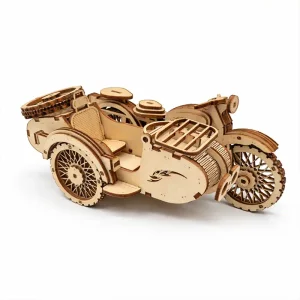
Historical sites, science museums, and art galleries commission replicas of artifacts, vintage vehicles, or architectural models to sell as premium, branded souvenirs.
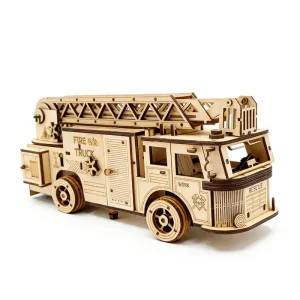
Companies commission custom-themed models (like a branded delivery truck or office tower) for high-end client gifts, building brand recall through interactive assembly.
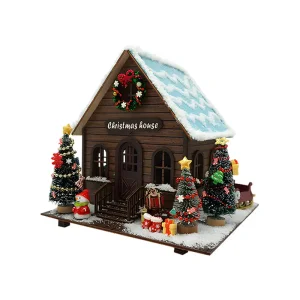
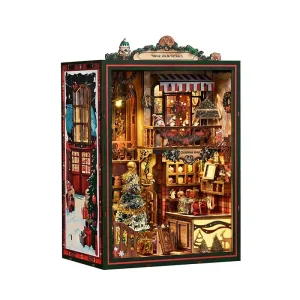
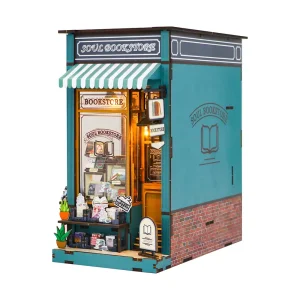
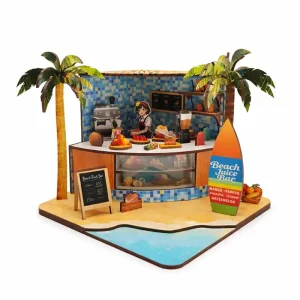
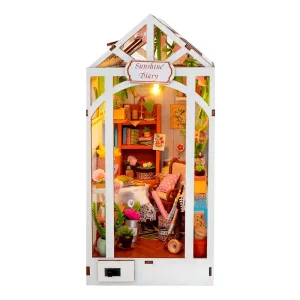
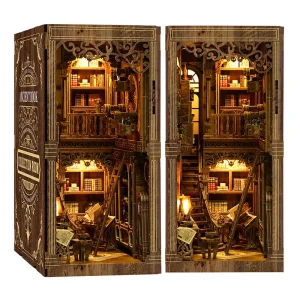
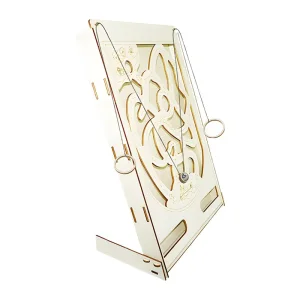
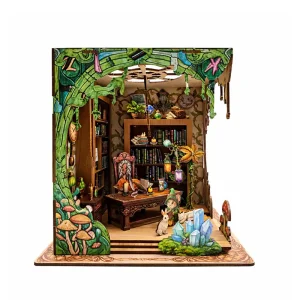
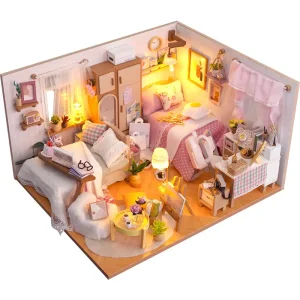
Online sellers and boutique hobby shops expand their private-label catalog with modern designs like LED book nooks and fantasy miniature houses, manufactured at low MOQs.
Navigating import logistics, international safety certifications, and quality control frameworks for seamless distribution.
Children's toys and decorative hobby products face strict regulatory standards globally. Entering markets like the EU, North America, and Australia requires certified compliance to protect consumers and avoid customs issues.
At Linyi Wooden Toys Limited Company, we manage testing based on client market destinations:
An expert projection of materials, technology integration, and consumer demand shifts over the next five years.
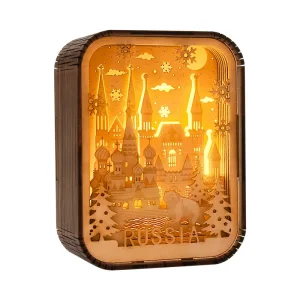
The line between static wooden models and electronic toys is blurring. Next-generation kits integrate ambient lighting, motion-sensor light switches, sound modules, and Bluetooth-driven mechanical gears.
Consumers expect plastic-free packaging. We are replacing inner plastic parts trays and protective wraps with biodegradable paper-based alternatives, structural cardboard inserts, and soy-based printing inks.
The market is shifting from single-use puzzles to modular setups. Consumers enjoy connecting multiple kits (such as combining bookstore and greenhouse modules) to build custom micro-landscapes.
Direct answers to critical questions about wood sourcing, structural tolerance, customized OEM processes, and global logistics.
Select from our production-ready designs. All models support custom OEM/ODM modification, private labeling, and regional packaging options.
 CraftODM