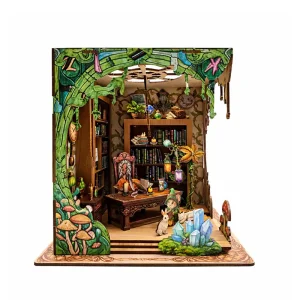
Explore our engineered miniature spaces and mechanical kits built for creative brands, hobby retailers, and private label developers globally.
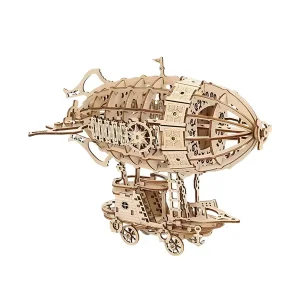
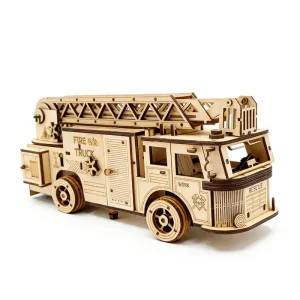
The traditional toy and craft market is undergoing a profound paradigm shift. As screens dominate daily life, consumers are experiencing digital fatigue. This has fueled a monumental global resurgence in tactile, offline activities—chief among them, 3D wooden puzzles and wooden moving puzzles. Historically, wooden puzzles were static representations; today, they incorporate intricate gear assemblies, self-winding spring mechanisms, counterweights, and kinetic paths that turn static wood into active engineering models.
According to current market intelligence, the demand for premium DIY wooden models has evolved from simple children's crafts into complex, highly satisfying construction projects aimed at adults, collectors, and corporate gift buyers. Key macro-environmental trends driving this expansion include:
"Information Gain Insight: The highest margin growth in the hobby sector is currently occupied by 'hybrid products'—those combining organic wood structures with modern technological integrations, such as low-energy LED modules, customized kinetic gears, and micro-sensors."
Industrial benchmarks achieved by Linyi Wooden Toys Limited Company under international standards.
Understanding the friction points of enterprise buyers, custom brands, and volume distributors in sourcing premium mechanical craft products.
Wood is hygroscopic. Sourcing raw materials like Russian basswood or dense poplar ensures minimal warping across varying humidity zones. Inferior manufacturers often use non-aged MDF, which expands during ocean transit, rendering the interlocking joints useless.
Precision in mechanical puzzles is non-negotiable. A variance of even 0.1mm can cause gears to bind or lock up. We enforce structural cutting tolerances below 0.05mm, guaranteeing smooth kinetic motion without requiring glue or sanding.
Western consumer markets demand strict safety clearances. Products containing active electronics (like LED lamps or music boxes) must conform to CE, EN71, REACH, RoHS, and EN IEC 62115 regulations to bypass customs delays.
The engineering principles that separate retail-grade wooden toys from premium collector-grade kinetic structures.
At Linyi Wooden Toys Limited Company, raw timber is converted into structural grade panels. Basswood is selected for its fine grain, low density variation, and high structural stability under tensile stress. Our process involves:
High-quality moving puzzles require more than just wood; they demand clean mechanical transmission interfaces and high-fidelity aesthetics:
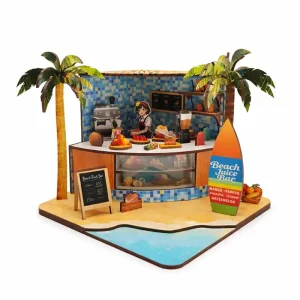
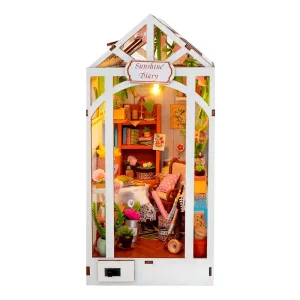
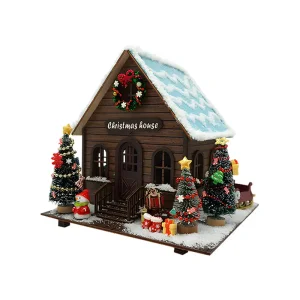
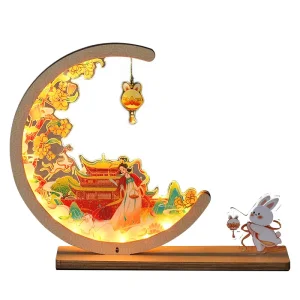
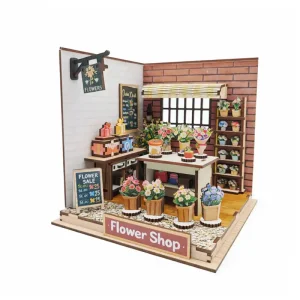
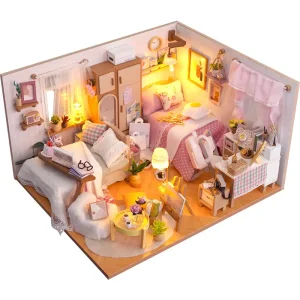
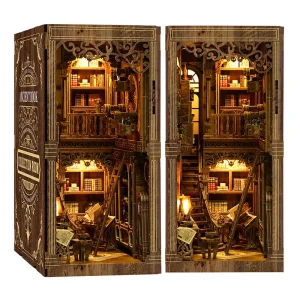
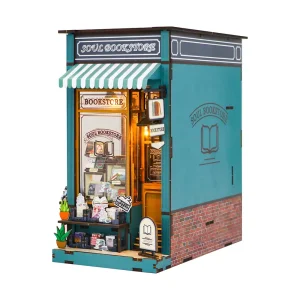
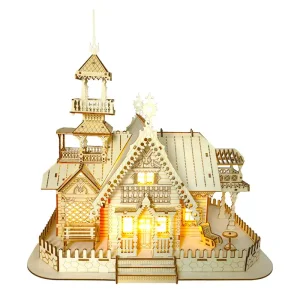
As an established industry pioneer, LINYI WOODEN TOYS LIMITED COMPANY operates as a professional, vertically integrated OEM/ODM manufacturer specializing in wooden DIY kits, 3D wooden puzzles, miniature house kits with LED lights, book nook kits, wooden educational toys, Montessori toys, and custom wooden craft products.
Translating artistic sketches and design files into functional 3D CAD modeling with precise gear and locking calculations.
Utilizing advanced laser cutting, laser engraving, and UV digital printing directly onto raw basswood, poplar, and MDF.
Conducting rigorous physical assembly tests, gear torque measurements, electrical safety verification, and instruction validation.
Developing branded packaging solutions, designing intuitive, visual manuals, and fulfilling bulk shipments globally with low 200 pcs MOQs.
Whether you are a global toy brand, a boutique gift distributor, a museum store manager, or an e-commerce private label seller, we structure our manufacturing chain to guarantee speed, consistency, and compliance.
Navigating international retail guidelines requires a highly systematic approach to product compliance. Products targeting Europe and North America must pass stringent third-party tests to ensure they are safe, toxic-free, and legally sourced.
Linyi Wooden Toys ensures that compliance is integrated at the very start of raw material sourcing. Our enterprise protocols include:
Expert technical answers to common questions asked by global category managers, supply chain heads, and product developers.
Q1: What is the typical MOQ for custom OEM/ODM wooden moving puzzle designs?
Our standard MOQ for custom OEM/ODM designs begins at 200 pcs per model. This low entry threshold enables brands to validate market demand without tying up excessive capital in initial inventory.
Q2: Which raw wood materials are recommended for high-precision mechanical puzzles?
We recommend basswood as the primary material. It possesses uniform grain density, has low dimensional shrinkage across temperature changes, and features a smooth finish that allows clean laser cuts. High-density poplar is another excellent alternative, while MDF is typically reserved for base structural panels or price-sensitive kits.
Q3: Can you integrate custom active electronics and light modules into the kits?
Yes, we specialize in one-stop integration. We design and package low-voltage LED circuits, toggle switches, batteries, and mini music box components directly into the puzzle kits. All electrical components comply with CE and EN IEC 62115 requirements.
Q4: How does Linyi ensure safety compliance for retail in the EU and North America?
We partner with global laboratories like SGS and Intertek to test and certify our kits. Depending on requirements, we verify conformity to EN71 (parts 1, 2, 3), REACH chemical restrictions, RoHS compliance, ASTM F963, and CPSIA for lead and phthalate limits.
Q5: What file formats do you require to begin custom structural design?
We accept design files in vector formats, primarily Adobe Illustrator (.ai), CAD drawing formats (.dxf, .dwg), and CorelDraw (.cdr). For 3D mechanical models, STEP or SolidWorks assembly files help accelerate prototyping.
Q6: How are visual instruction manuals created for complex moving models?
We have in-house designers who specialize in translating complex mechanical processes into simple, 3D visual instructions. We provide high-resolution, step-by-step visual guides that make assembly clear for international end-users.
Q7: What is the estimated turnaround time from design to bulk delivery?
Typically, the design-to-sample phase takes 7-14 days. Once the pre-production sample is approved, bulk production takes 25-35 days, depending on order size and custom printing requirements.
Q8: Do you offer FSC-certified options for sustainable brand positionings?
Yes. We can source fully certified FSC timber. This ensures your supply chain meets the latest European Deforestation Regulation (EUDR) and other regional environmental criteria.
Q9: How are pieces organized to prevent loss during shipping or unpacking?
Our pieces are laser-cut and held in place on the wooden sheets by tiny retention tabs. The user simply pops them out during assembly. For small, loose hardware like metal shafts, screws, and springs, we package them in separate, labeled polybags.
Q10: Can you print colored designs directly on the wood, or are they stickers?
We print high-fidelity designs directly on the wood using industrial UV flatbed printers. This ensures the ink bonds with the wood grain, preventing peeling, bubbling, and fading over time.
Additional custom designs and industrial solutions crafted for global retail distribution.
 CraftODM