 CraftODM
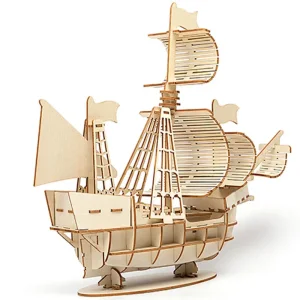
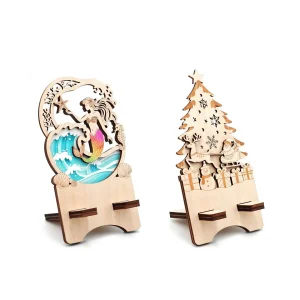
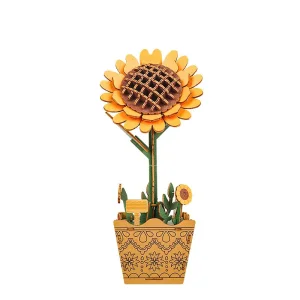
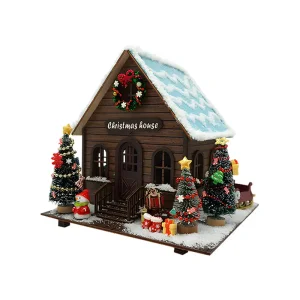


B2B Whitepaper: Engineering the Future of Educational Wooden Puzzles
The global educational toy market is undergoing a structural paradigm shift. As parents, educators, and institutional buyers increasingly push back against "screen-dominated" sensory exposure, tactile play has re-emerged as a cornerstone of early childhood cognitive development. Furthermore, the global drive for carbon neutrality and sustainability has forced brands away from petrochemical plastics toward renewable, natural substrate alternatives. In this context, high-precision educational wooden puzzles and 3D assembly kits represent one of the fastest-growing niches in the recreational and educational sectors.
LINYI WOODEN TOYS LIMITED COMPANY sits at the forefront of this industrial transformation. As an established OEM/ODM powerhouse, we bridge the gap between abstract product conceptualization and high-throughput, compliant physical manufacturing. By pairing state-of-the-art CO2 and fiber laser-cutting arrays with eco-friendly wood sourcing, we provide worldwide brand owners, educational distributors, and private labels with resilient product architectures that pass stringent international safety and structural standards.
"The challenge of modern toy manufacturing is no longer just shape and color; it is the synthesis of environmental sustainability, sensory feedback, and strict international compliance."
1. Global Commercial and Industrial Status Quo
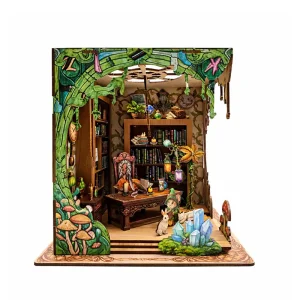
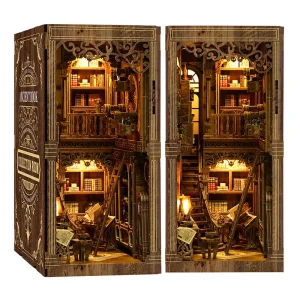
The contemporary B2B market for wooden toys and miniature kits is categorized by demanding consumer preferences. Consumers no longer view toys solely as temporary playthings. Instead, they seek products that double as decorative home elements, stress-relief hobbies, or educational tools. This has catalyzed the growth of sub-sectors like Book Nooks, 3D DIY Mechanical Assemblies, and LED Miniature Settings.
From an industrial perspective, raw materials must satisfy multiple international frameworks. Modern retailers require documented chains of custody (FSC certification) to verify that raw timber like basswood, poplar, or Medium-Density Fibercard (MDF) is sourced from sustainably managed woodlands. Additionally, structural design has shifted toward friction-lock, glue-free mechanisms, which demand sub-millimeter engineering tolerances to prevent wood swelling, shrinking, or snapping in varying climates.
2. China's Supply Chain Resilience & Manufacturing Superiority
Operating out of Linyi, the wood processing capital of China, our factory exploits extensive geographical and structural supply chain networks. China's unparalleled logistics infrastructure, integrated raw material markets, and skilled labor pools provide B2B buyers with unique competitive advantages:
Material Clustering & Agility
Direct proximity to major timber yards reduces raw material transit delays, ensuring consistent stock availability of basswood, poplar, and specialized MDF boards.
High-Precision Engineering
State-of-the-art laser arrays achieve cutting tolerances down to 0.05mm, eliminating assembly friction issues and maximizing child-safe smooth edges.
Vertical Integration
From CAD structural blueprint translation, precision engraving, UV flatbed printing, and hardware accessory matching, to final packaging design under one roof.
3. Detailed Technical Roadmap & Advanced OEM Capabilities
Our manufacturing technology roadmaps are regularly updated to stay ahead of international design standards. We offer comprehensive mechanical engineering for wooden toys, ensuring that visual concepts translate smoothly into constructible puzzles. Below is our blueprint for technical development:
Phase 1: Precision Micro-Engraving & Hybrid Materials
Integrating non-wood structural elements (such as safe acrylic sheets, light-guiding films, and miniature metal shafts) directly into traditional wooden puzzles. This improves aesthetic detailing and tactile complexity.
Phase 2: Modular LED Integration & Clean Electronic Pathways
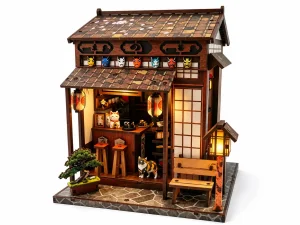
Designing plug-and-play lighting modules and solder-free wiring routes. This guarantees safety for child end-users while introducing stunning ambiance features to book nooks and 3D architectural kits.
Phase 3: High-Resolution UV Print Direct-to-Wood
Eliminating decals or stickers that peel or fade. We apply EN71-compliant, eco-friendly UV cured ink directly to the wood substrate. This achieves vivid colors, precise registration, and moisture-resistant durability.
4. Localized Application Scenarios
B2B buyers operate in various regional markets with differing educational frameworks and demographics. Wooden puzzles serve multiple developmental, recreational, and commercial purposes:
- Institutional STEAM Classrooms: Schools and educational centers use 3D assembly kits to teach children mechanical engineering, geometry, physics, and spatial logic.
- Geriatric Cognitive Therapy: Assisted living and memory care facilities use simple 3D puzzles to help senior citizens maintain motor control and mental sharpness.
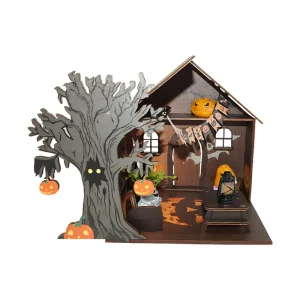
- Modern Home Decor & Hobbies: Adult hobbyists assemble micro-dioramas, book nooks, and light shadow boxes. These double as highly detailed tabletop decor.
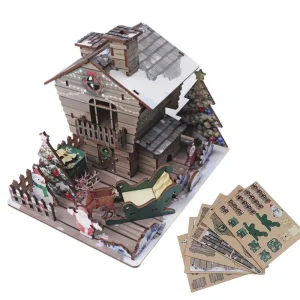
- Seasonal Promotional Merchandising: Museum stores and corporate brands customize themes (such as holiday, maritime, or historical motifs) for unique gifts.
5. Environmental Stewardship and Structural Integrity
At LINYI WOODEN TOYS LIMITED COMPANY, environmental responsibility is integrated directly into our manufacturing processes. We carefully manage moisture levels in our raw basswood and poplar sheets, keeping them below 12% to prevent warping during sea freight transit. Every structural locking design is virtual-stress tested inside CAD simulations to verify strength and puzzle piece durability. This helps minimize structural fatigue and returns for retail brands.